The Leadershape Institute Retreat
January 14th - 17th, 2025
Special Thank You to: Hannah Driscoll, Gina Pearson, LaJoi Boone and Chelsea Pratt, PhD
What is it?
A 4-day overnight retreat at the Allerton Park & Retreat Center in Monticello, IL with a goal of University of Illinois students "to gain leadership skills, clarify their values, and become more resilient as they work to make change in their communities and impact society to have more people working towards a just, caring, and thriving world." - leadershape.org


Andrianna, Izzy, and I discussing how we tend to act in uncomfortable situations
What Did I learn from attending the Institute?
At the Leadershape Institute, I came to understand how essential diversity is in any organization. The program helped me realize that everyone’s opinion is valid, and great ideas often come from people who are not always the first to speak up. By listening with intention, I learned to create space for different perspectives and to value input from all voices, not just the loudest. This mindset helped me build stronger relationships with people I may not have connected with otherwise, especially the underdogs who often go overlooked. Some of the most meaningful connections I made were with individuals who brought quiet strength, fresh ideas, or unique lived experiences to the table. LeaderShape pushed me to step outside my usual circle, build trust across differences, and focus on creating a community where everyone feels seen and heard. It also helped me grow my network in a way that feels personal and grounded in mutual respect.
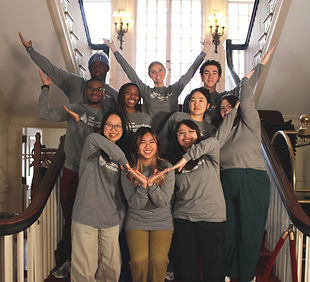
My small group forming a "V" representing our team name, "The Voyagers"
What strengths did you bring to the team and what was its impact?
One of my biggest strengths is communication, and it played a key role during my LeaderShape experience, especially in creating space for honest conversations. In our first project, we made posters about how we grew up and what shaped us. I volunteered to go first and shared personal stories, even though it felt a little uncomfortable. I knew someone had to start, and by doing so, I helped set the tone. Being open about emotional topics helped others feel more comfortable doing the same.
After that, more people began to open up in their reflections. By taking the first step, I helped build trust and show that this was a place to be real. I also made an effort to keep conversations going by asking thoughtful questions and showing genuine curiosity. Whether we were doing group activities or having casual conversations, I focused on connecting with others. Communication helped me express myself, but more importantly, it helped others feel seen and heard.

Me preparing to speak on a vision to introduce green roofs onto campus buildings.
What was most challenging and how did I navigate it?
The most challenging part of the LeaderShape experience was working with a group of people who had very different personalities and leadership styles. Some were outgoing and quick to lead, while others were quiet and often overlooked, especially a few international students. Early on, this created an imbalance in our group discussions. I noticed that not everyone felt equally included, so I started paying closer attention to who had not spoken or seemed like they wanted to but could not find the right moment. I made space by asking things like, “What do you think?” or “I would love to hear your perspective.” I also took time during breaks to talk with those who were quieter. These small efforts helped build trust and made others feel more seen and valued. Our group became more balanced and connected, and I was reminded that leadership is not about being the loudest voice, but about making sure others have the chance to speak and feel heard.

My core life goal of improving food security displayed in a mock news article
How did the Institute help develop your two focus competencies?
At the LeaderShape Institute, I focused on growing in service mindedness and cultural competence. My group was incredibly diverse, including international students and people from many different racial, cultural, and personal backgrounds. Hearing their stories opened my eyes and broadened how I view leadership. I learned that cultural competence is not just about awareness, but about being curious, open, and respectful of different ways of thinking. That helped me ask better questions, listen more deeply, and avoid making assumptions. I also saw that service minded leadership means stepping up to support, not control. When we presented our life posters, I volunteered to go first and shared personal parts of my story. That helped others feel more comfortable opening up and allowed us to connect on a deeper level. I was not doing it for attention, but to support the group emotionally. LeaderShape taught me that leadership is strongest when it puts others first and sees diversity as a source of strength.